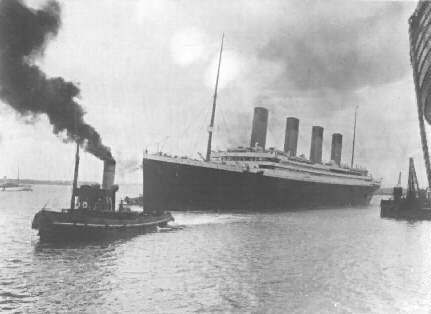
This should have been the headlines at the conclusion of the Official Inquiry, except that the technical expertise and technology for molecular analysis necessary to exonerate the Iceberg from direct responsibility for the TITANIC sinking did not exist until decades after the fatal maritime disaster. Cold water temperatures, about 35 degrees Fahrenheit, caused the steel to crack in a brittle manner, like glass, when it hit the Iceberg, instead of the ductile, twisting, tearing manner, we are all accustomed. During the first half 20th century, the temperature above which typical high grade ship steel changed to ductile, tearing failure mode from the brittle mode was 50 degrees Fahrenheit. Not until 1963, over 50 years after the TITANIC sank in cold arctic water, was the first authoritative documentation published by two researchers from the U. S. Naval Research Laboratory providing a comprehensive, quantitative analysis describing the phenomenon of ductile to brittle crack propagation in steel.
How widespread and pervasive was this lack of knowledge, that fingers should be pointed at the engineers that designed and built the TITANIC and should be held responsible for the disaster? In all probability, cracks in steel hull plates of ships was common place. Except that due to the riveted construction techniques of the era, a crack in a single plate was not catastrophic and would be attributed to an occasional single bad steel plate from the steel mill or faulty fit-up in manufacture. A brittle fracture, would only run to the next riveted joint, typically not more than 20 feet in length, with noticeable but not catastrophic leakage which could be contained until the next reasonable scheduled repair.
Symptoms of the low temperature brittle fracture of steel were showing, but the engineering community, like engineers (and doctors) even today are prone to treat the symptoms and not look into the true cause of the failure(disease) and find a true and final solution(cure).
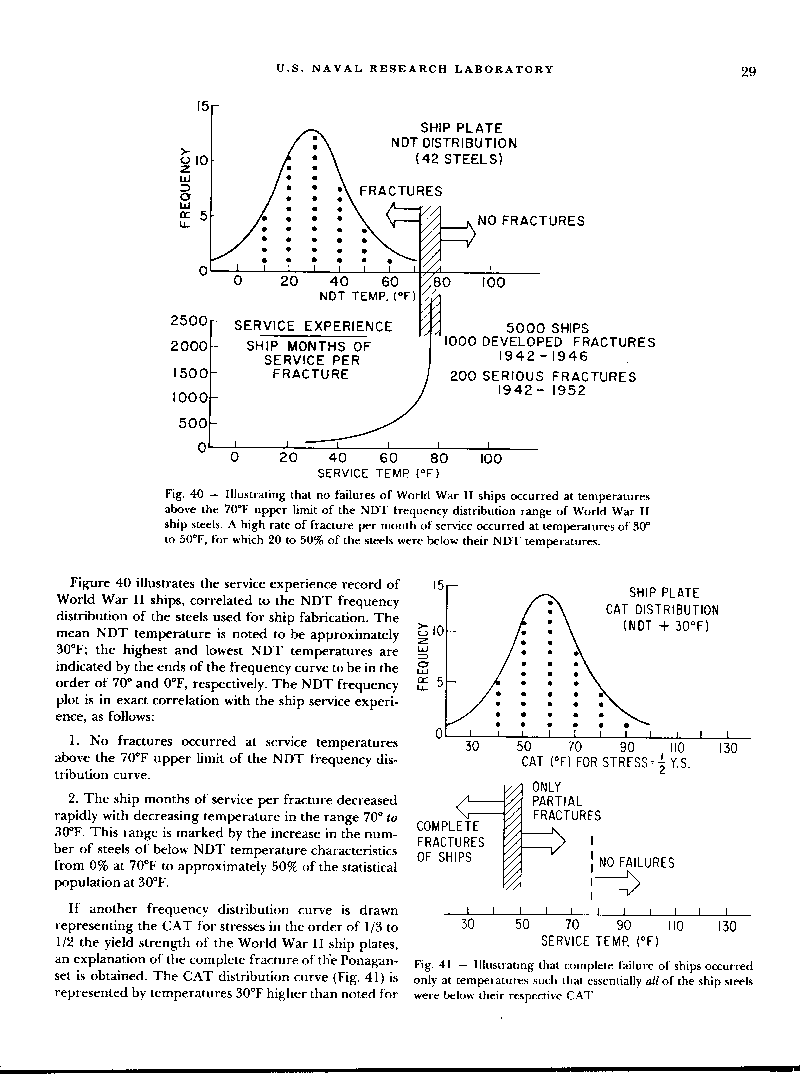
The engineering community was so clueless as to the low temperature brittle fracture of steel problem that over 5000 Liberty ships were mass produced during World War II without accounting for this phenomenon. Thirty years after the TITANIC sank only because the water was about 15 degrees too cold, the US Government built over 5000 Warships with the same fundamental flaw. Of these 5000 Warships, 1000 suffered significant failures between 1942-1946 because of low temperatures, while 200 suffered serious fractures between 1942-1952. No one may ever know exactly how many ships "just disappeared" in the North Atlantic and were falsely chalked up as lost to German U-Boat torpedo attacks due to low temperature brittle fractures. Some torpedoed ships may have even survived an attack, albeit damaged, without the hull shattering due to the low temperature brittle crack phenomenon. The Government knew something was wrong, because the failure rate of the welded Liberty ships was statistically astronomical in the North Atlantic, while literally NON-EXISTENT in the warm waters of the South Pacific.
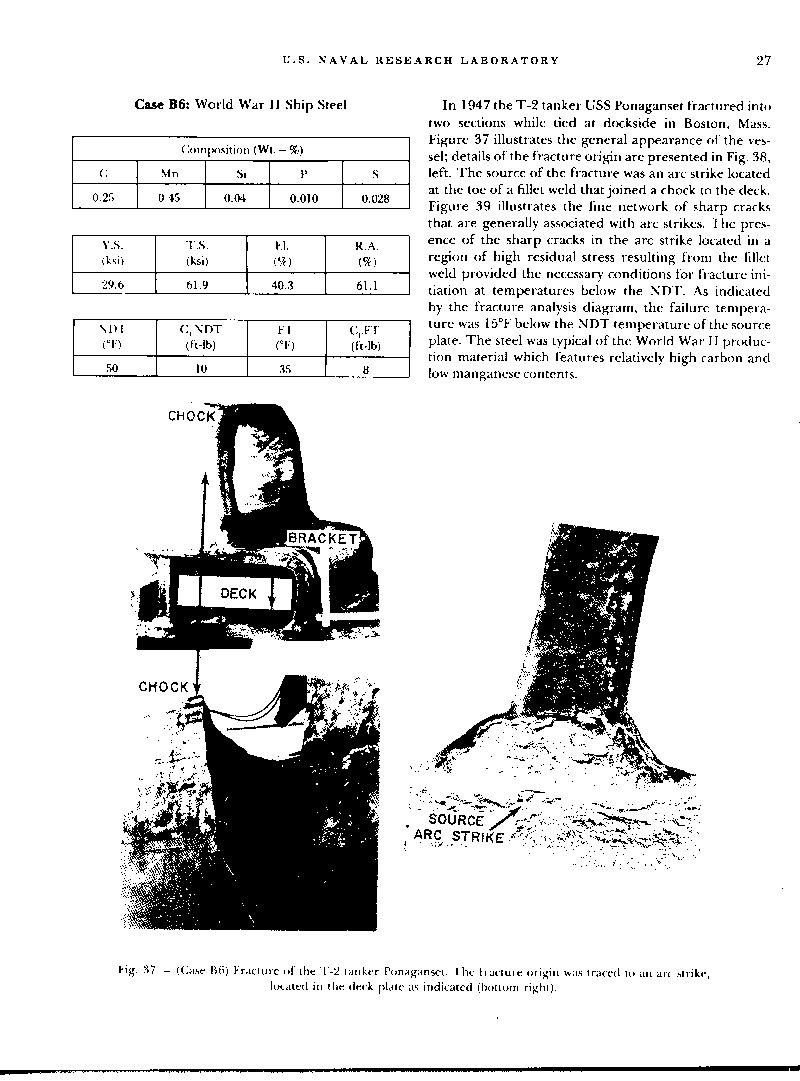
Not until 1947, that a ship literally broke into two pieces while tied to a dock in the cold water of Boston Harbor, that there was enough evidence, left accessible and dramatic enough, that the problem was taken seriously. This parallels uncannily with the Aloha Flight 243 aircraft accident, which landed at the Maui Airport after an 18 ft. section of the upper fuselage disintegrated inflight at an altitude of 24,000 feet above the Hawaiian skies. The Aloha Flight 243 accident initiated the "aging aircraft program" that changed the course of aviation engineering history with the same magnitude as the breaking into two pieces of the USS Ponaganset changed naval engineering history.

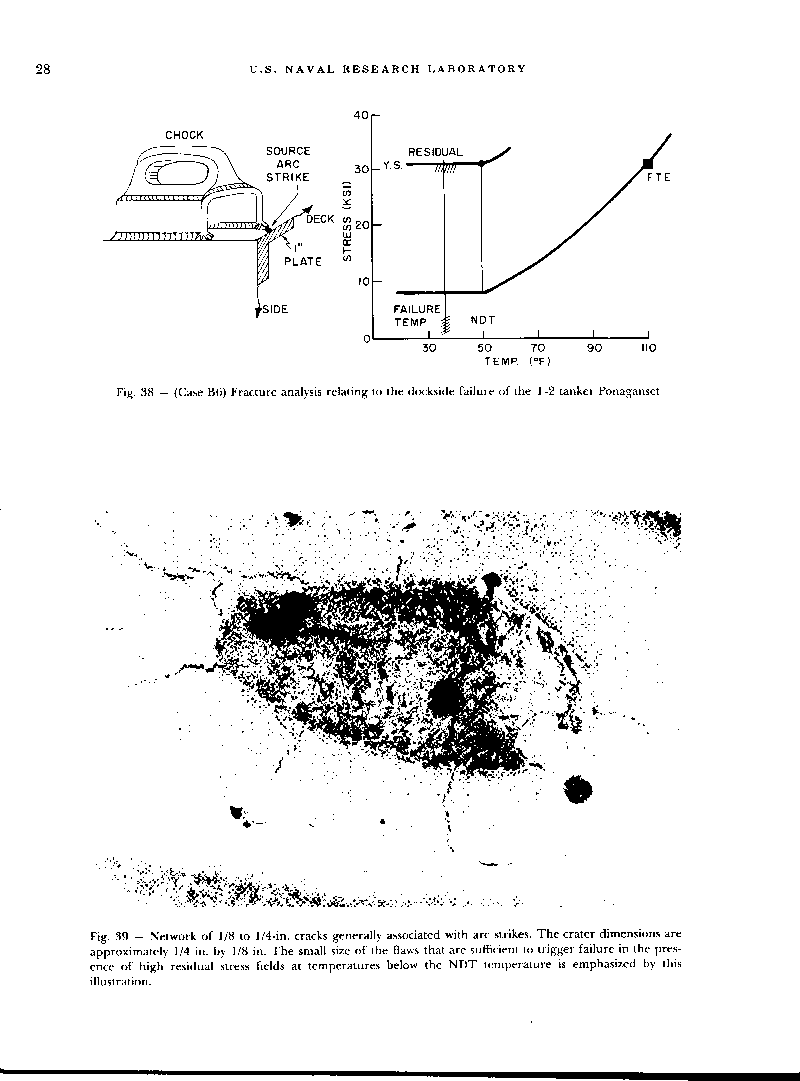
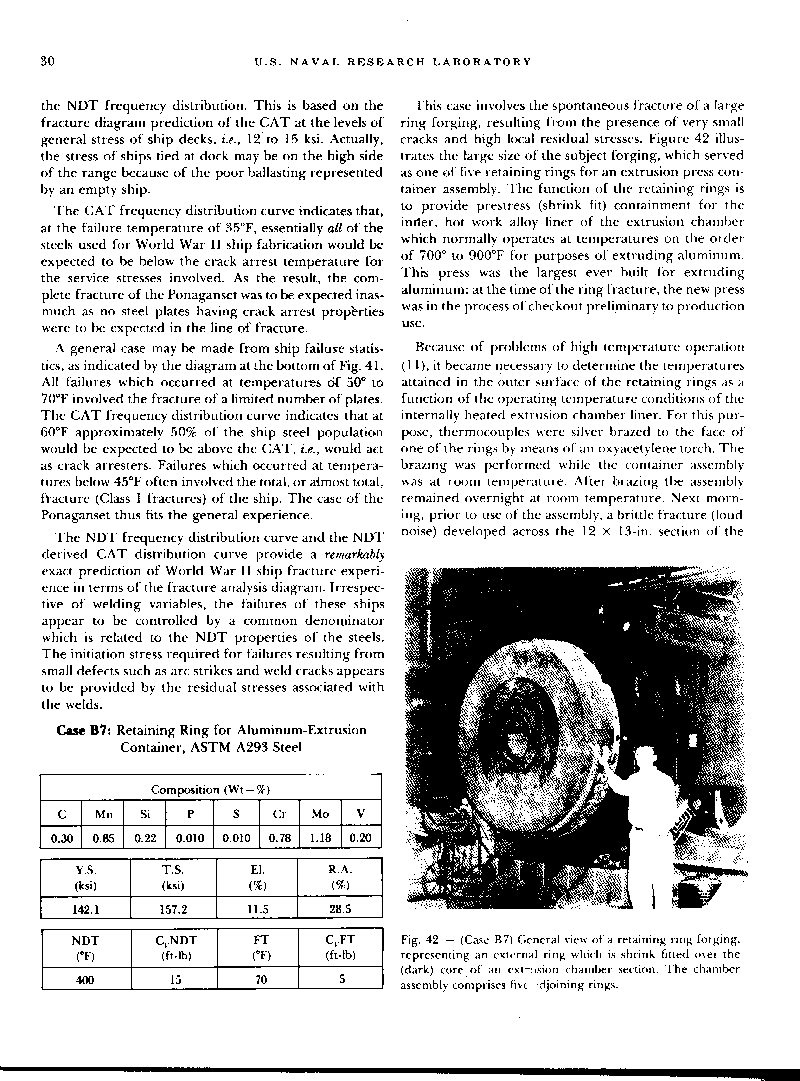
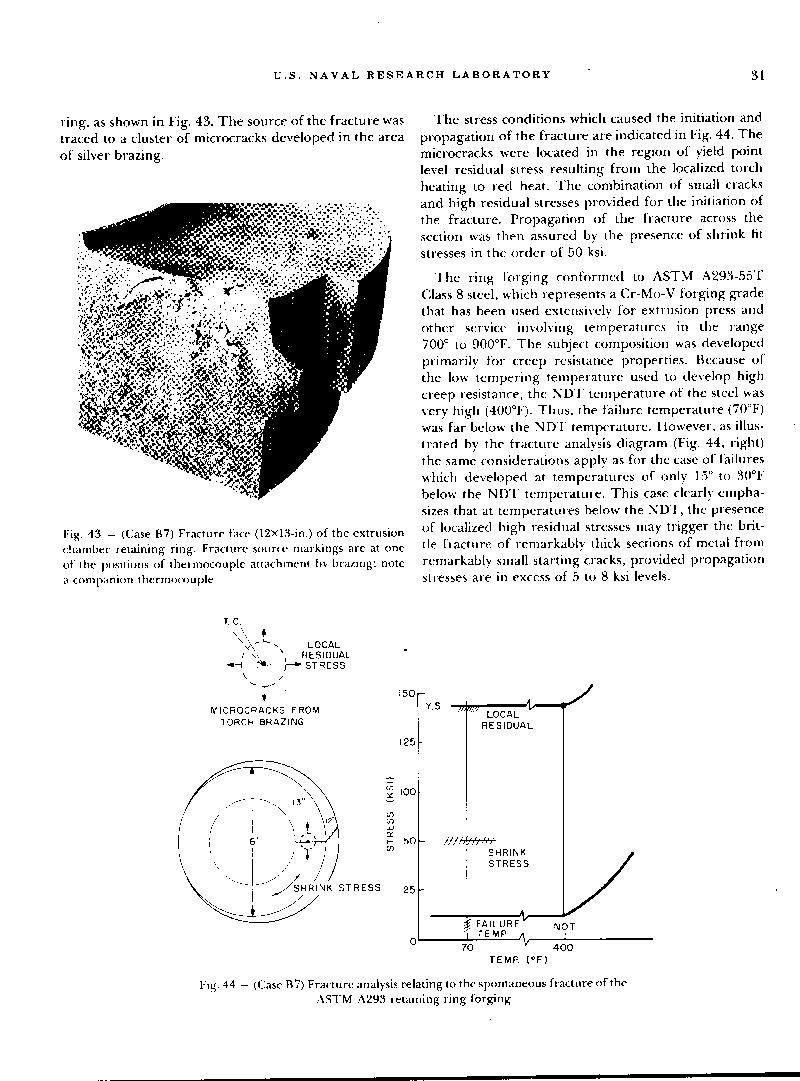
The USS Ponaganset (AO-86) was a T-2 tanker, a Escambia class Fleet Oiler, built at Marinship in Sausalito, California and commissioned on May 15, 1944. Only 3 years old, on a cold day at dockside in Boston, Mass., at a temperature of 35 degrees Fahrenheit, the stresses at a stray welding arc strike on the deck of the ship exceeded the yield strength of the steel. Yield strength of steel is the stress level when the steel starts to permanently deform. Typically, the yield strength is only about one-half of the ultimate tensile strength, the stress where steel actually breaks into separate pieces. Much deformation occurs in a piece of steel between when the steel starts to yield and finally fails at ultimate tensile, usually the steel will stretch between 20% to 40% of its original length before it breaks, if it acts in a "ductile" manner.
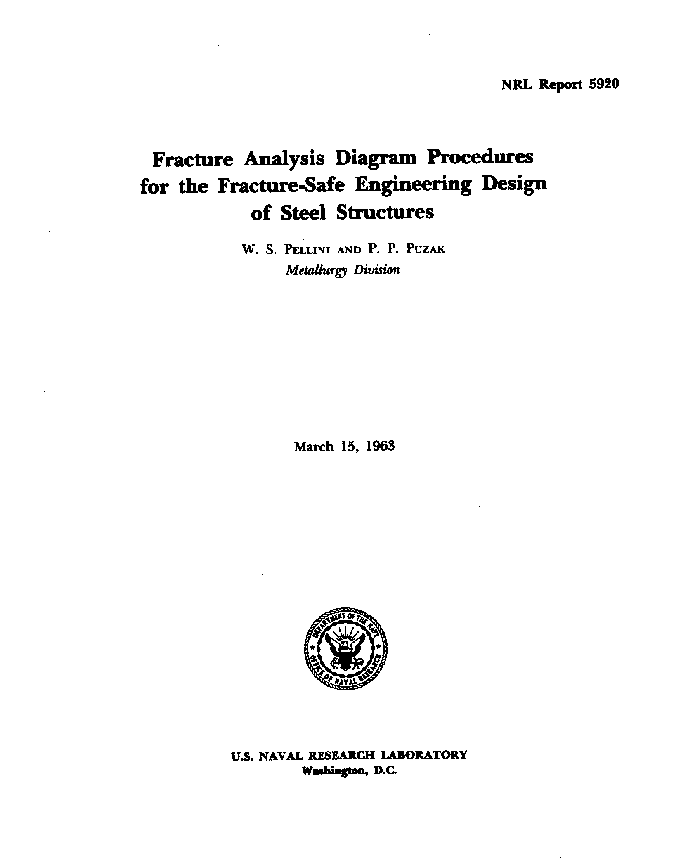
The "BIG OOPS" in the TITANIC and Liberty shipbuilding disasters is what was defined by two researchers at the U. S. Naval Research Laboratory, W. S. Pellini and P. P. Puzak, the "Nil Ductility Transition" temperature phenomenon. On March 15, 1963, Pellini and Puzak published their findings after a 15 year study, defining and also devising a method of quantifying the temperature at which steel changes from DUCTILE to BRITTLE fracture modes. Above the Nil Ductility Transition temperature, a certain piece of steel can be loaded to its ultimate tensile strength, stretching 20% to 40% before it breaks. Below the Nil Ductility Transition temperature, when a piece of steel is loaded to only the yield strength (approximately 1/2 of the ultimate strength) the piece of steel will crack in a brittle manner, like glass. Once the crack starts to run (at the speed of sound), it will only stop when it runs out of steel, the load is released or the crack is arrested by running into a piece of ductile acting steel.
In the case of the USS PONAGANSET, the stresses reached the yield strength at a location where a tiny crack existed on the deck of the ship in 35 degree Fahrenheit weather. The NDT of the steel used to build the Ponaganset was determined after the failure to be 50 degrees Fahrenheit. Consequently, the crack propagated in a brittle manner and literally ran around the ship, near instantaneously, and the ship broke in two.
The US War Machine, and not unjustifiably, was priding itself that it could build a shipyard that could deliver mammoth ships at a rate of one every 13 days. Marinship set a record of building one ship, the S.S. HUNTINGTON HILLS, from empty dock to complete ship in just 33 days.
Who would have thought that a 15 degree temperature drop and a stray welder's arc strike could destroy a ship as effectively as a German torpedo? Could a 29,000 ton ship be that fragile? How could the US Government build 5000 ships with such a flaw?
When an average person is subjected to a "Disaster", the memory of the emotion is long, but the memory of details is short. Mention TITANIC and the immediate response is "Sank by Iceberg". This is a normal defense reaction. It is perfectly acceptable to even the simplest mind that a mammoth iceberg could sink an "unsinkable" gigantic steel ship or an errant missile could bring down a 747. But if the answer is as simple as the water was too cold but nobody knew or frayed insulation caused an arc and explosion, how can we trust that all the other engineering masterpieces our lives depend on, everyday, are not as fragile? The planes we fly in, the miles long bridges we drive across, are they also susceptible to catastrophic failure by a simple quirk of Nature the greatest minds of our civilization are not aware?